Dan Shick
9. July 2026
Dan Shick, Wikimedia Deutschland (WMDE): First of all, tell me a little bit about yourself.
Anne Chen (AC): I’m Anne Chen. I’m a specialist in the ancient Roman world, and my training blended art historical and archaeological approaches. I did my PhD at Columbia, and I was trained in a relatively traditional fashion, at a time when Digital Humanities (DH) methods were emerging but had not yet been integrated as a core part of graduate training. I’ve been amazed to find I’ve been able to learn the Wikimedia ecosystem without a ton of background.
The low barrier to the Wikimedia ecosystem and the early investment in low-resourced languages from the outset are really opening people’s minds to the fact that we could be using these tools to work better together.
Our project is translating between those deeply in the tech world and folks who are open to tech’s potential to help us work better together, share resources and knowledge, but they don’t always feel able to wade through and learn the technical end.
WMDE: It might come as a surprise to some that there are digital humanities programs training participants in Wiki products or projects.
AC: Yeah. Some colleagues and students don’t realize that the semantic web has brought a big shift in information management strategies. The semantic web has opened up distinct new possibilities for working multilingually, sharing information, working across cultures. It allows for working in more granular ways that are better for humanities data, and it can capture the fuzziness of humanities data in a way that I think has often grated on humanists.
For example: an inscription where you can’t say for sure that it came about in 165 or 166. Different scholars will argue different things.
What I’m seeing in the semantic web, and specifically in the Wikidata ecosystem, is that both of those truths can coexist: scholar A and scholar B hypothesize two different dates, and both are marshaling different evidence, different perspectives. That ability to tease out fuzziness is revelatory for the humanities — where you don’t have to flatten messy data in the ways we’re used to.
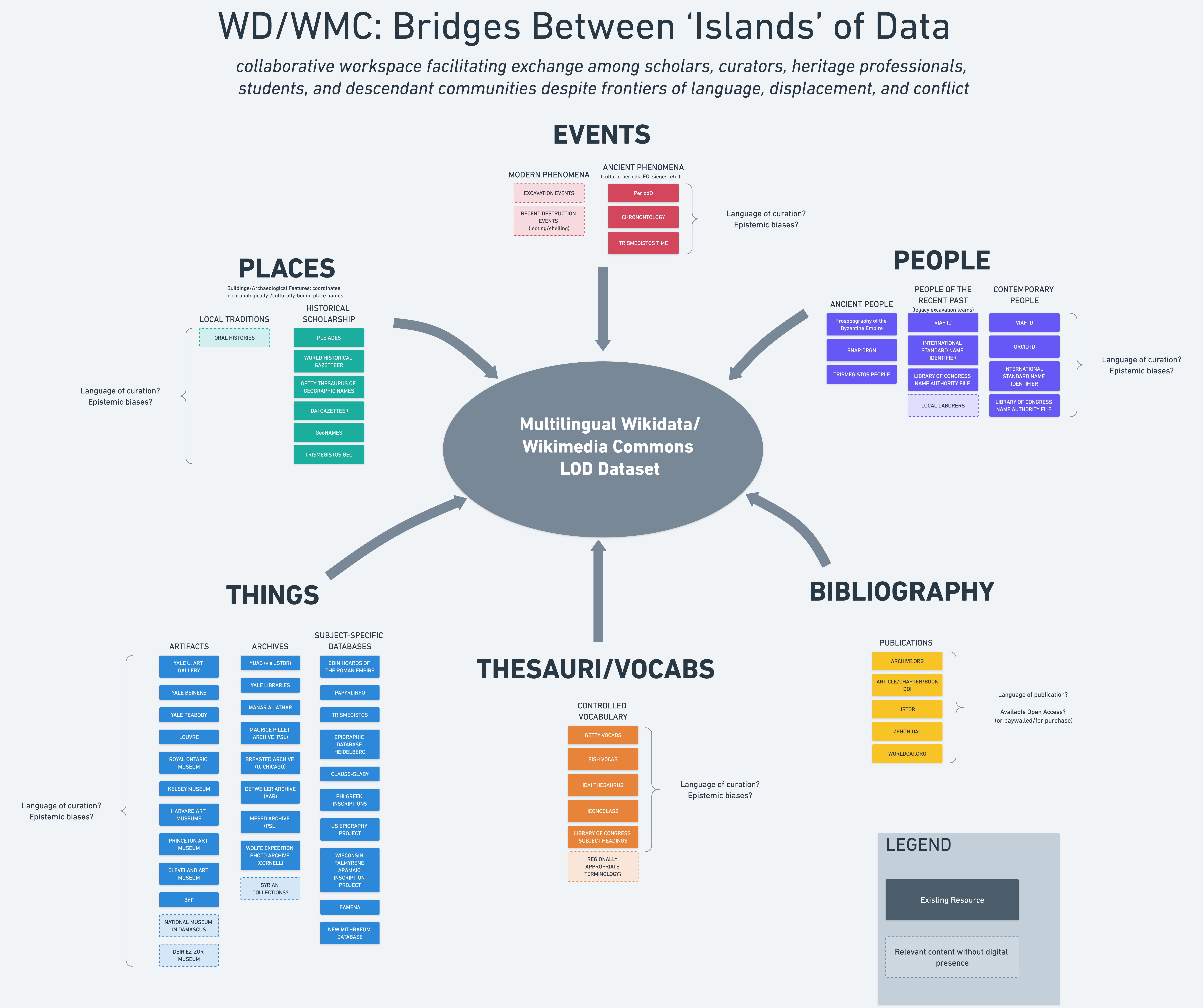
WMDE: Would you say that traditionally trained people are accustomed to flattening that data?
AC: I’m working with an archaeological site in eastern Syria. Transliteration between Arabic and English means that you can have a dozen spellings for place names. Not to mention that maybe the local population has a different naming tradition for a place that might differ from the scholarship’s way of calling a place.
And those truths can coexist, always have coexisted. But what’s acknowledged in the scholarship is what appears online, and it’s the parameter by which content is traditionally made searchable. Local populations frequently have their own knowledge and traditions rooted in these buildings, which means they may know places of shared global interest by entirely different naming traditions.
You can map those different ways of knowing such a place to the same Wikidata node, as opposed to being exclusive about which tradition we prioritize or valorize in the data ecosystem. It’s enabling next-generation work.
When you’re working with these sensitive, colonially entangled topics, and when we digitize collections rooted in these colonial pasts, we have to recognize that those collections have, in many cases, been shaped by only one particular perspective — a cultural perspective, an institutional perspective. But we can do a lot more by opening up access to these collections for collaborative work by taking advantage of the sensitivity of the data infrastructure we have access to.
WMDE: That’s really cool.
AC: For somebody who’s never done digital work, and who feels uncomfortable stepping into digital territory, it can be a tall order helping them to understand why they should care about the digital work, to get them over the threshold into the Wiki ecosystem.
But when those people get on-wiki and start to manipulate the data hands-on, that changes things. They recognize that they can do the technical stuff, and they find — as professors have been saying a lot in the last 20 years — that actually doing stuff in the classroom, as opposed to just hearing about ideas, really solidifies learning.
Part of my responsibility, and I would hope part of the responsibility of other humanists in a similar position to mine, is to teach the next generation about these tools. But because my generation of scholars wasn’t necessarily taught in an environment that was digital humanities forward, I worry we’re not foregrounding the relevance of those skills for the generation of archivists, museum professionals, and archaeologists coming up behind us.
When my students distill a fact or an interpretation — this thing was found in that place — and then anchor it with, say, a citation to a particular page number in a print resource, they’re learning about traditional research skills, about digital literacy, digital colonialism… and frankly, about the access that some colleagues elsewhere lack to reference materials that many of us take for granted. Yes, material is published. But it sits on certain library shelves, or it’s tangled up behind paywalls, or it’s only in a certain language.
My students can leverage their institutional access to do research, then learn to distill bite-sized facts and interpretations they encounter in the scholarship into Wikidata edits. Because of the Wikidata infrastructure, their edits are immediately legible in Arabic. Then our colleagues in Syria, primarily Arabic speakers, can reshape it or add to it from their perspective, and from the perspective of their institutions and of the communities they’re working with. And together we’re creating this knowledge graph that becomes a tool for reshaping the digital footprint of a site like this.
My students are learning about the legacies, about the archaeology, everything down to learning how to use footnotes and the index in the back of a book — skills that students are not familiar with these days — and they’re learning how to distill a fact into tripartite statements that can be expressed in Wikidata. I’m in the humanities, but I’m trying to take a STEM-like approach to using the Wikidata environment as a kind of field school for helping students to familiarize themselves with the new skills and tools and, frankly, how to do research… like how archaeological field schools bring students in to learn practical archaeological excavation. We don’t expect students to just know naturally how to excavate, but somehow we expect them to know how to do domain-specific archival research and to learn digital skills without the same kind of practical skill-building environment.
WMDE: Tell me a little bit about WikiProject IDEA.
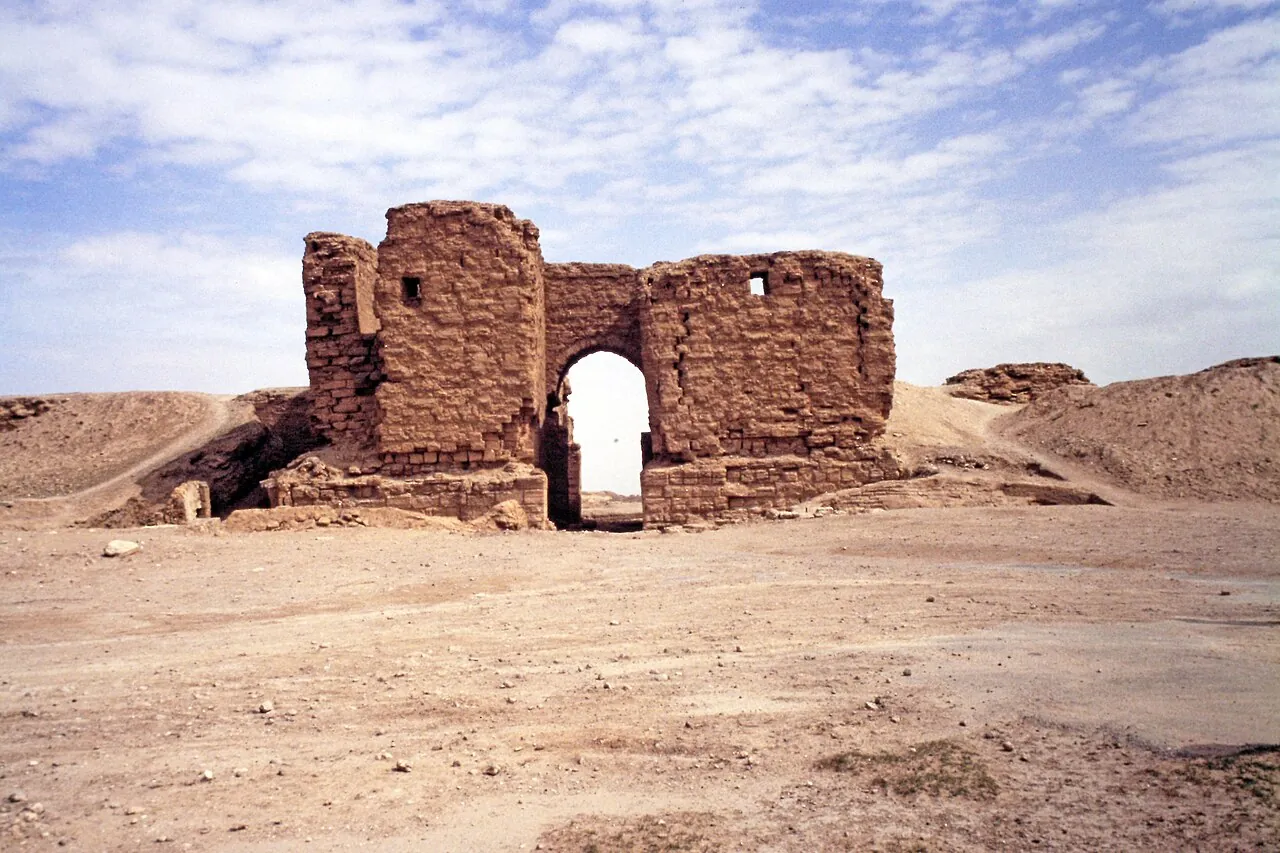
AC: The project started in 2020 with a foundational data set that codified all of the individual buildings and important places associated with this site, called Dura-Europos, in eastern Syria. It’s on the bank of the Euphrates, founded around 300 BCE. The site saw many different successive cultures. Hellenistic Greeks founded the city, which was then taken over by the Arsacid regime coming from the Parthian East. Later it passed into Roman control.
The site itself is an important touchstone in many humanities disciplines, because when a threat came from another Persian dynasty, the Sassanids, the Romans built a large embankment to reinforce their walls, which preserved a lot of the wall paintings, buildings and incidental daily objects that don’t normally exist in this kind of deep archaeological record.
The best preserved and documented period is the Roman period, but the reality is that this site has never ceased to be known and notable in the community. There are villages just outside of the site that have essentially been written out of the narrative. We’re usually so focused on this deep, ancient past. But more recently, in the course of the Syrian war, the site ended up on a fault line between warring factions. Inside the city there’s still unexploded ordnance, and devastating looting took place. It’s a complex situation. The news portrayed the looting as funding for terrorist organizations. And while that’s true, it started for subsistence reasons — people needed to feed their families.
But we haven’t ever shared information back with the local communities about their own connections to the site and why it’s important. We’ve entirely alienated them from the study and knowledge of this site. So, recognizing that, the linked data infrastructure draws things together that have been published, fragmented into different museum collections.
A good example of this: in the northwest corner of the site, there’s a particular temple that scholars have called by a dozen different names — just in English. Early on, the excavators called it the Temple of the Palmyrene Gods [and other names], and more recently we call it the Temple of Bel. All of the legacy data sets use those old, non-standardized temple names, while more recently collected data sets might call it the Temple of Bel. But a computer, or somebody who’s not specialized in the site, remains unaware that both relate to the same thing.
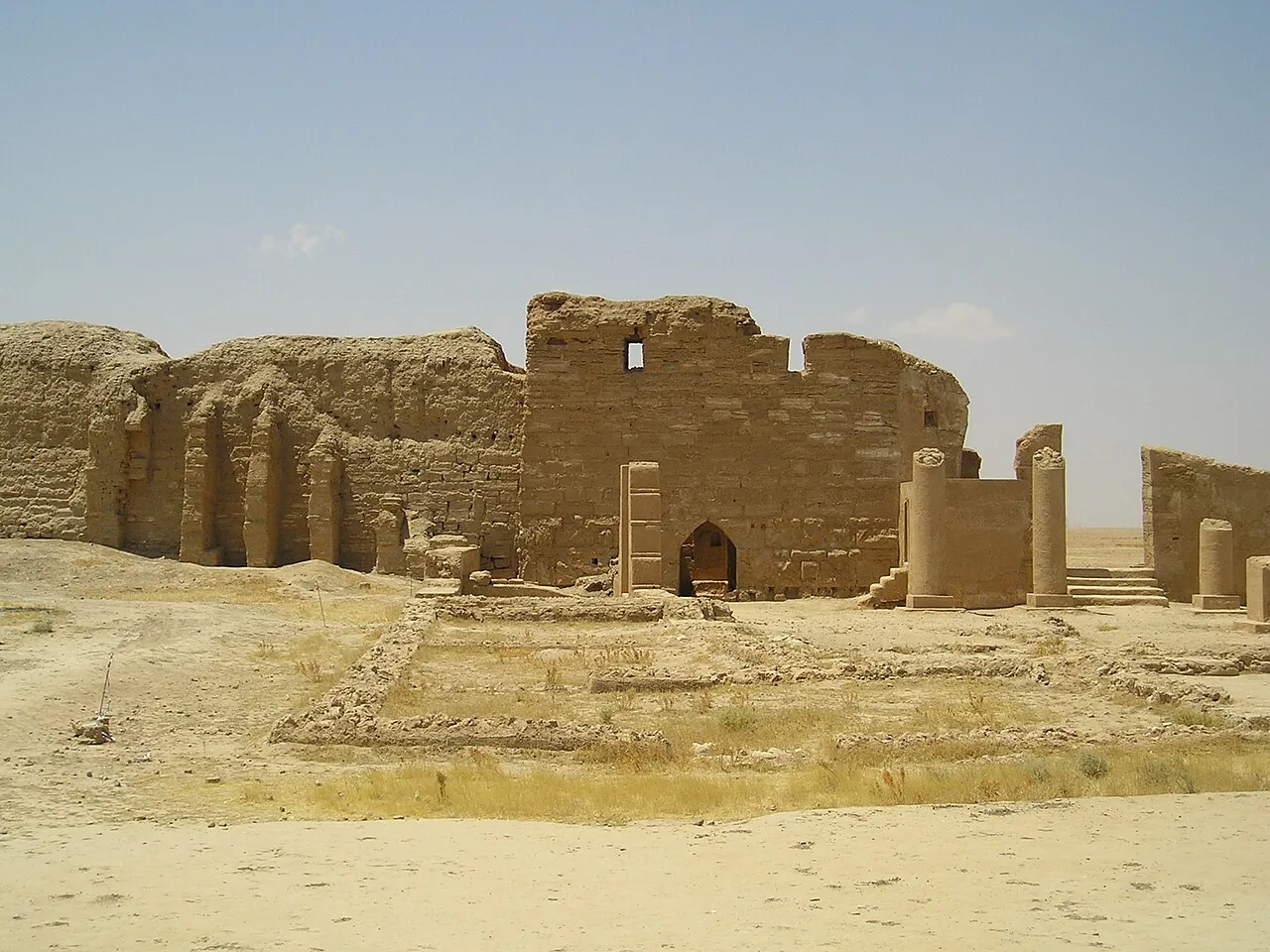
So if you have photographs of a particular building, and you point to a “depicts” statement in Wikidata and say that this photograph depicts that specific building, you’re building in searchability according to all of those complex naming traditions that have shifted over time, multilingual, from scholarly tradition and from the local folklore tradition.
One of the pioneers in this has been Yale University Art Gallery, who have been really open about working with us with both their artifact collections and their archival photographs collections. We could start aligning things — photographic details using structured data, for instance, to indicate a photograph that shows a given building in the distance, and here in the foreground is this other thing. We started using the work of building the knowledge graph as a way to teach people how to interact with linked open data, how it’s useful.
In 2022, we got a National Endowment for the Humanities (NEH) grant, which was rescinded about a year ago with the recent administrative changes. There’s been a recent lawsuit, and hopefully that money will be coming back to us.
But that experience showed me the importance of working in the open ecosystem. It meant that the work wasn’t reliant on one person, and it wasn’t reliant on one particular institution. We could continue the work.
And as part of that NEH work, we did a pilot project. We trained a group of five Syrian heritage professionals in Linked Open Data methods and worked together to select a handful of archival photographs to use as a common learning tool. We’d discuss the photographs, look at their existing metadata, learn about digital annotation tools in the Wikimedia ecosystem.
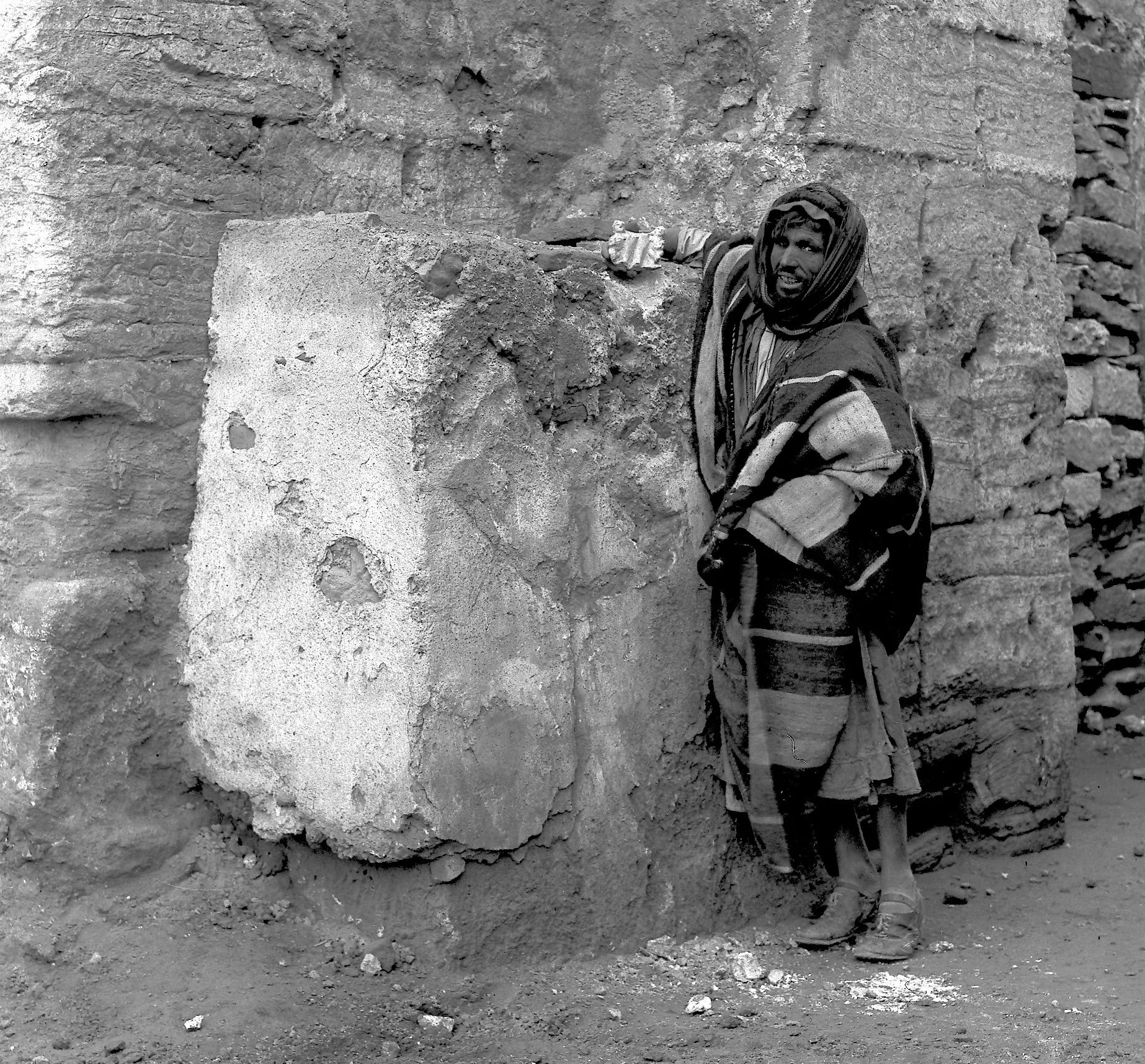
Imagine an archival photograph from the 1930s of the Palmyrene Gate, a big, distinguishing monument at the site. Well, there’s a local name for it as well. There’s also a person in that photograph holding an artifact. We can make it clear what artifact that is and what collection it’s in. And there are inscriptions documented in the broader open knowledge ecosystem that are depicted in the background of that photograph. So we went into these photographs, and we started using the Wikimedia ecosystem as a discussion point to ask, what’s missing? What’s biased? What would each person looking at the photograph highlight about it?
An epigrapher would make out an inscription that can be identified in the background; an art historian would want to talk about the sculpture itself; and so on. Our colleagues said, “We could mark up all of the local clothing that this photograph attests to.” This photograph was taken at a time when there wasn’t a lot of photographic equipment in this region.
This was an opportunity to establish a digital record of traditional clothing in this region — not something imagined by the original excavators, but an entirely valid way of approaching that photograph. So they investigated — are there controlled vocabularies, for instance, that we could use to mark up the photograph? (You won’t be surprised to learn that there was in fact no vocabulary available, not like the big ones that museums use.) So how to create a item? How to investigate, say, Getty vocabularies, to see if there’s an existing vocabulary term that could just be linked up?
Where there wasn’t, we would adopt that important term. In five to ten years, Syrian collections are ideally going to need that vocabulary to process their own collections in an internationally interoperable way. Then we went back to Getty and said, here are these vocabulary terms we think should be documented.
You can map different ways of knowing a place to the same Wikidata node, as opposed to being exclusive about which tradition we prioritize or valorize in the data ecosystem. It’s enabling next-generation work.Anne Chen
So there’s this symbiotic feedback. We’re using the Wiki ecosystem to teach more broadly about how authority resources work, how knowledgeable scholars from different backgrounds can improve those resources and build toward a digital future — a future where Syrian collections can be in conversation with the big institutions who are already digitizing their collections, who are currently dominating the linked data landscape.
WMDE: So you’re laying the foundation for people to contribute in a meaningful way.
AC: Yeah. I think that one of the beautiful things about the Wikimedia ecosystem is that, because it’s hosted and multilingual, anybody could potentially get started immediately. There’s this community of people that you can ask questions of multilingually. The Wikimedia ecosystem is a community of helpers.
There are emerging international working groups for building the infrastructure that would allow various collections (Damascus, Yale) to speak each other’s digital languages. They all hold objects — sometimes two halves of the same object! In the interwar era, there was a practice called “partage“, essentially a division of finds. A good example from the site I’ve been working on: literally half of a wall painting. As was typical for the time, they would cut the wall paintings off the physical structure. Half of the wall painting was cut off and removed to the Louvre, and the other half was removed to Yale. They literally connect to each other, but the records didn’t point to each other until we did the work in Wikidata. Now you can actually use the place node of the building to reconnect the different digital fragments.
WMDE: Is there an antonym to the word “partage”? Because it sounds like that’s what you’re doing.
AC: Oh, yeah. I’ve been calling it digital recontextualization.
WMDE: Oh, I like that.
Next we’ll share part two of our interview with Dr. Chen, in which she discusses generative AI, the nature and specifics of good mentorship, and what it was like doing research work with Syria during the ongoing war.
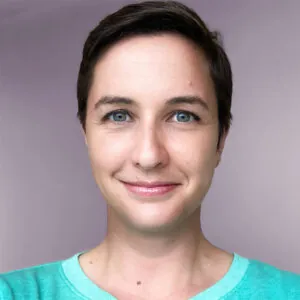
Dr. Anne Hunnell Chen is Assistant Professor of Art History and Visual Culture at Bard College. Dr. Chen specializes in the art and archaeology of the globally-connected Roman world and is committed to exploring how low-barrier Linked Open Usable Data (LOUD) can provide more equitable access to archaeological data in the digital realm and empower stakeholder audiences as collaborative curators. She is the founder and co-director of the NEH-funded International Digital Dura-Europos Archive (IDEA), an archaeological data accessibility project whose documentation efforts are aimed at sharing out workflows that help to overcome disciplinary data silos and work to dislodge enduring impacts of colonialism.