
Zita Ursula Zage
2. October 2026
WikiProject Video Games preserves what might otherwise vanish
Ege Atacan Doğan has played video games his whole life. These days, he also spends his time making sure their history doesn’t disappear.
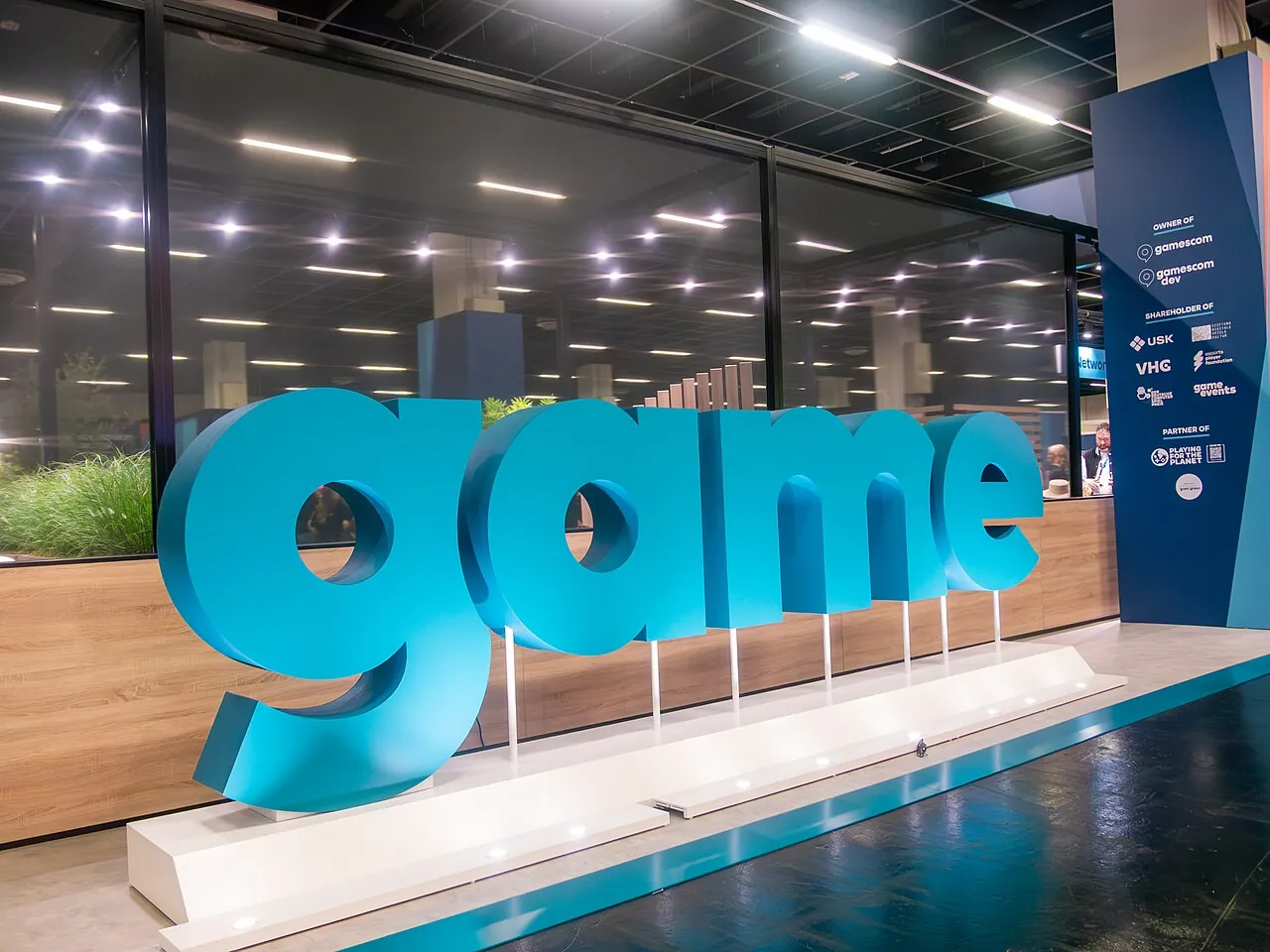
As a member of WikiProject Video Games, Ege documents the metadata behind the games he and others grew up with on Wikidata, from individual Lego Star Wars levels to the very properties used to define what a Wikidata game item looks like. His work sits inside a bigger conversation currently playing out in the games industry: at this year’s gamescom in Cologne (August 26–30), Wikimedia Deutschland’s Alan Ang gave a presentation on why game preservation matters, and where open data fits in.
“Wikidata can help build a rich, connected ecosystem of knowledge about games, from titles and developers to platforms, genres, characters, and more. And the possibilities don’t stop at preservation. Developers can use Wikidata’s open data to build apps, create new tools, and bring gaming history to life in new ways,” Alan said.
Games as cultural heritage
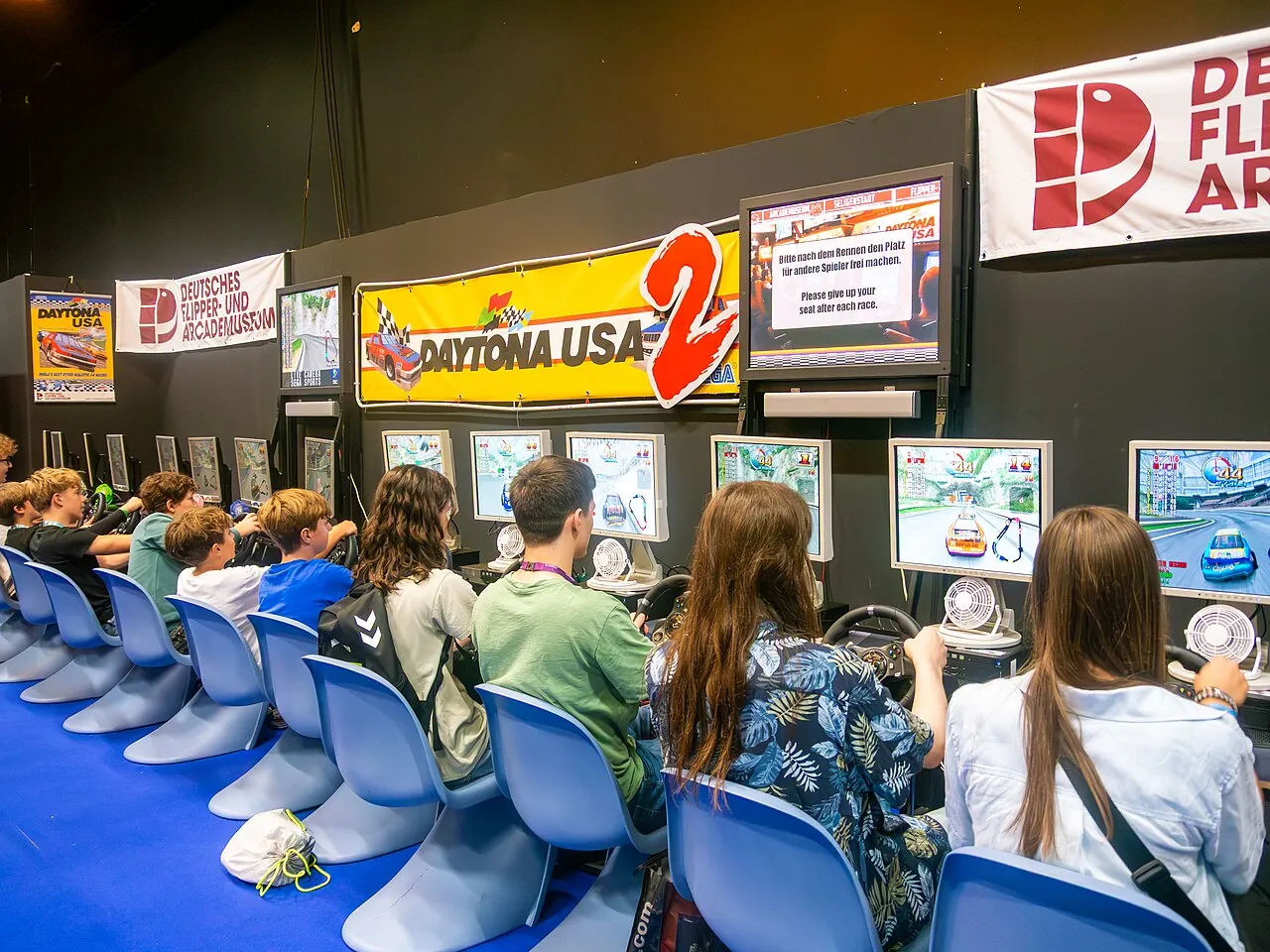
Games are increasingly being recognized as vital pieces of both tangible and intangible cultural heritage, serving both as artifacts to be preserved and as interactive tools for cultural transmission. Their growing role as part of cultural heritage reflects across gamescom, where sessions like “Playable Pasts, Gamified Futures” explored themes such as the preservation of games and their impact on society, and how one session turned an exhibition into a game and far more. (For a complete list of topics, check out the online schedule.)
Dr. Henrike Maier, Humboldt Institute for Internet and Society, explains that game preservation may matter more than other media, because most games have a lifespan of only about five years before a new system renders them obsolete. If they are not preserved, their history, cultural significance and their very data is lost forever.
But preserving them is far from simple: copyright often protects games for terms that can stretch decades beyond that five-year window, and for many older games it’s almost impossible to trace the original licensing agreements and figure out who holds which rights today.
WikiProject Video Games is preserving the data, not the games
On Wikidata, one project tackling this by documenting the games data is WikiProject Video Games. This is a community effort to document and centralize metadata for video games, developers, platforms, and characters, building an open, structured record of gaming history that anyone can build on.
When we spoke to Ege Atacan Doğan, he told us about how games are preserved and why he does this work. Ege is a computer science student from Sabancı University in Turkey who’s currently pursuing a computational humanities master’s degree at JMU Würzburg. A lifelong reader of Wikipedia, he made his first contribution to a Wikimedia project in 2021.
“I have played video games for my whole life, and while I don’t consider myself as much of a gamer as some other people, it’s certainly something that is an important part of my life,” he says.
He’s quick to draw a distinction: “Wikidata is more about the preservation of the games’ data, not the games themselves.” For example, Ege started documenting the levels of Lego Star Wars on Wikidata, adding structured data for each one.
How games get modeled on Wikidata
Asked how he approached modeling a game on Wikidata, Ege describes his process of learning by example:
“I would just look at very well modeled Wikidata items, say, Minecraft or Fortnite, and copy stuff from there. Looking back at it now, some of it I probably did poorly. Back then I believed that even bad modelling was a bit better than not having the info at all. I’m not 100% sure if I think that way now.
“But I chose the properties that felt the most intuitive, like P674 (characters) for playable and non-playable characters, P156 (followed by) for the next level, P155 (follows) for previous levels, etc. If I did it now, I would first check the documentation and the [properties’] usage instructions.”
The WikiProject Video Games page lays out a standard structure for modelling games which includes core properties like instance of, genre, developer, and platform, and finer details like distribution format and official website. It’s a thorough template for turning a game into structured data.
Developers can use Wikidata’s open data to build apps, create new tools, and bring gaming history to life in new ways.Alan Ang, WMDE Senior Partner Manager
Why it’s sometimes hard to keep going
After Ege had successfully created Wikidata items for three levels of Lego Star Wars, he decided to call it quits.
“What I tried to do [ended up being] repetitive and ultimately boring. I started thinking of other methods that could work, like making a spreadsheet first and then converting things to QuickStatements commands. But ultimately, it felt like too big of a task to complete, and I stopped.
“Another issue was that the information that can be represented is just too big. I guess I won’t tackle the Lego Star Wars levels again, unless there is a community drive to do it. I don’t know if all individual levels are notable enough anyway. I hope that at least I left some solid modelling with the one model item I created, so that if someone else wants to continue, they have solid ground to step on.
“At any time on Wikidata, there are millions of things to do, and an editor has to prioritize some over others. I continued focusing on other things.”
Copyright added another layer of complexity. “One challenge I faced was that images of games have to be Creative Commons-licensed, and usually they’re not. [That’s why] on Wikipedia, the Lego Star Wars-related articles have poor quality pictures, so on Wikidata, I couldn’t add any images from the game[…] because of copyright.”
Building games with Wikidata’s data
Beyond preserving games on Wikidata, Ege also builds games using Wikidata’s data. He recently released the first version of his game Roundtable, developed with support from a Google Summer of Code internship and inspired in part by projects like The Distributed Game and Depictor.
“While many games exist that use Wikipedia and Wikidata, very few actually aim to improve the content directly. [Those that do] are mostly tools with a few gamification processes. With features such as leveling, XP, and in-game currencies, the Roundtable tool aims to be a game that also improves the content on Wikidata. It’s still at a beta version, but it is a complete prototype that can function as a proper game. All it needs is a community now.”
“Using Qlever and Wikidata API tools, I lay out the graph for some items [in Roundtable]. There are Wikidata queries that produce contradictions, things that logically can’t be true. My program gives that contradiction to the player and asks: ‘What is the problematic situation here? What should be fixed?’ Once enough people agree, the fix gets committed to Wikidata.”
You can try it yourself at roundtable.toolforge.org.
Stories like Ege’s are a reminder that game preservation on Wikidata isn’t driven by a single grand plan but gets built one item, one property, and one contributor at a time — often by people simply documenting the games that shaped their own lives. That work is tedious, sometimes incomplete, and constrained by real obstacles like copyright, but it adds up to something lasting: a shared, structured record of gaming history that anyone from researchers to fellow players can query and build on. As conversations like this one show, the case for treating games as part of our cultural heritage is only getting stronger. Projects like WikiProject Video Games offer a concrete way to ensure that this heritage doesn’t disappear the moment the next system comes along.

Our interviewee Ege Atacan Doğan spent a long time making important contributions to the WikiProject Video Games group. When he’s not rescuing video games for the benefit of future generations, he’s hard at work completing a master’s program in computational humanities at JMU Würzburg.